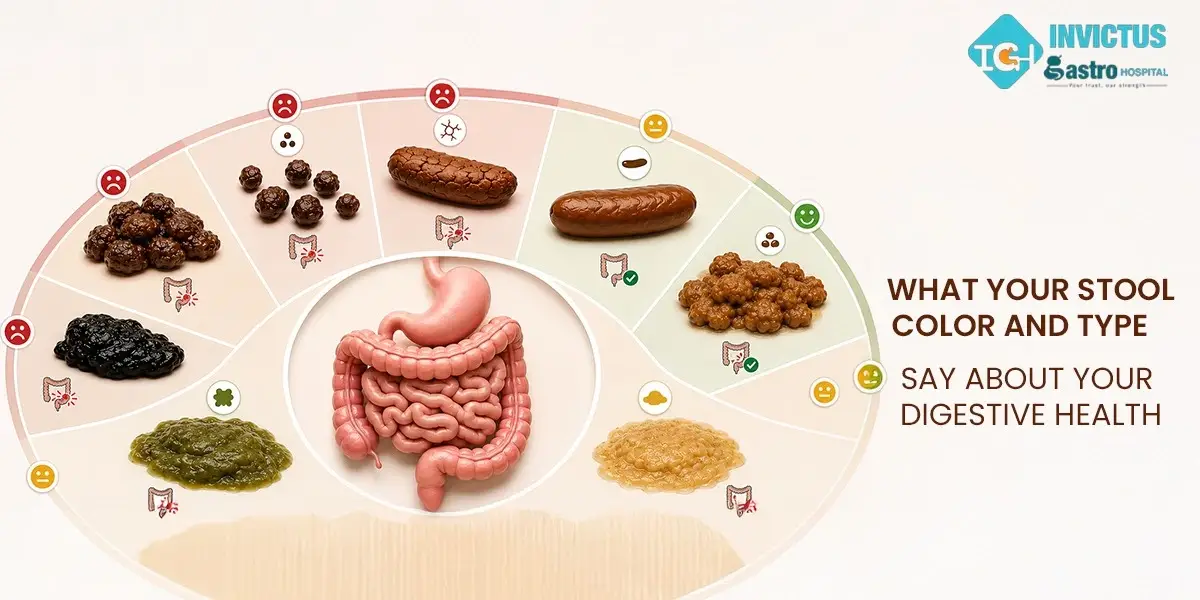
The nature and color of your stool can say a lot about the health of your digestive system. Brown, hard, and soft stool are some of the indicators that your digestive system is working well. The potential signs that there is something worth observing are color, texture or even a shift in the consistency.
The patients in Ahmedabad often observe the change in stool and would want to know what it is. Food-based changes or medication-based changes are other changes. Others are indicative of a condition requiring medical care. Having awareness of what to be aware of will make you do it at the right time.
This blog talks about the significance of the different stool colors and types, the changes that cannot be ignored, and why. One of the first things that your body tells you is that there is a change in your stool.
The color of the stool depends on what you eat, what medication you take, and the functionality of your digestive system. Brown is the healthy baseline. Any gradual change towards brown is worth noting.
Color alone does not confirm a diagnosis. A doctor reviews color alongside other symptoms to give an accurate picture of your digestive health.
The type of stool is based on its shape and consistency. Seven types of stool are categorized by the Bristol Stool Chart. Each type provides a good picture of the condition of your digestive system. The type that you pass regularly is determined by your diet, hydration, and gut health.
It contains hard and lumpy stools that are hard to pass. These are signs of constipation and slowness in digestion. Among the common causes are low intake of fibre and dehydration.
Smooth, sausage-shaped, and easy-to-pass stools. These are the healthiest types of stool, and they exhibit normal digestion. The majority of doctors regard Type 4 as the best one.
Smooth blobs that have visible edges and pass through. This form is on the edge between normal and loose. Isolated Type 5 stools tend to be diet-related.
Shaggy, sticky faeces with shreddy edges. This kind implies light diarrhea or rapid digestive organs. Common triggers are stress and some foods.
Completely liquid and has no solid particles. This implies acute diarrhea and potential infection or inflammation. Recurrent Type 7 stools require immediate medical care.
Black stools are usually an indication of bleeding in the upper gastrointestinal tract. This includes the stomach and the first part of the small intestine. Moreover, iron pills can result in black stools, and never use them without consulting your doctor.
The presence of bright red stools will be a sign of bleeding in the lower digestive system. Hemorrhoids are a major causative factor in most patients. Constant bloody diarrhea that is red needs proper medical care.
The white or clay coloured stool is an indication that there is a problem in the flow of bile. The liver, bile duct, or gallbladder may not be functioning properly. The change of color is to be reported to the doctor.
Stools that are yellow or greasy are an indication that the digestive system is not absorbing enough fat. It is usually caused by conditions of the pancreas or small intestine. The repeated yellow stools should be investigated by a specialist.
Stools that contain blood or mucus should be examined by a doctor. The changes can be signs of infection, inflammation, or other bowel diseases. Early diagnosis provides the best direction towards the appropriate treatment.
Changes in the stool can have many possible causes. Some are on short-term diets. Some indicate a medical condition that requires medical attention.
The majority of the stool changes are self-limiting and resolve in a day or two. Continuous or frequent changes should be addressed with a suitable medical examination. Being aware of when you should visit a doctor to check on a change in stool is healthy for the digestive system in the long run.
Stools that are black or bright red and come without a dietary history require urgent care. The colors may signify that there is bleeding in the digestive tract.
The lasting changes in stool beyond two weeks require medical research. This involves continued diarrhea, constipation, or unusual colors that fail to clear.
Weight loss without any apparent cause and stool alterations should be examined immediately. This association can be indicative of a severe underlying disease.
The presence of stool changes and abdominal pain or cramping requires the attention of a doctor. Pain during or after stooling deserves attention as well.
The presence of visible blood or mucus in stool should be reviewed by a doctor as soon as possible. One should never leave these signs without attending to them.