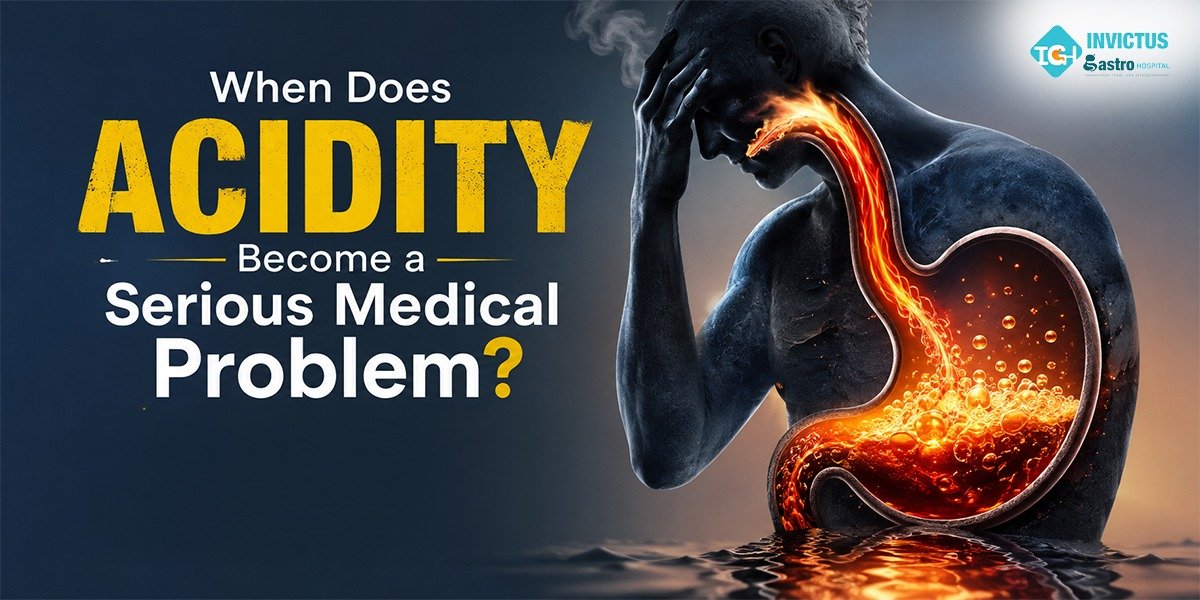
Almost everyone has felt that familiar burning sensation after a heavy meal or a late-night snack. A quick antacid, some water, and it passes. Most people brush it off as normal acidity and move on with their day.
But what happens when it does not pass? What if the burning keeps coming back, the chest pain feels different, or you start struggling to breathe after meals?
Acidity is one of the most common digestive problems affecting millions of Indians. It is also one of the most ignored. The truth is, occasional acidity is harmless. But persistent, untreated acidity can quietly progress into a serious medical condition that goes far beyond your stomach.
This article explains when acidity crosses the line, what serious acidity symptoms look like, and why you should never dismiss recurring digestive discomfort.
What Causes Acidity?
The stomach secretes acidic juices for digesting food. Normally, a muscular valve known as the lower esophageal sphincter prevents the acid from entering the esophagus. If this valve gets weak or relaxes too early, the acid in the stomach can make its way back up into the esophagus. That backward flow is acid reflux, and the burning sensation it causes is the acidity/heartburn.
Acidic food comes from:
Having large, oily, spicy foods.
Consuming food within 30 minutes just before bedtime.
Too much tea, coffee, or alcohol.
Obesity and excess belly fat.
Smoking
Stress and irregular sleep patterns
Certain medications like painkillers and blood thinners
Pregnancy
Occasional acidity triggered by these factors is manageable. The issue starts when it turns into a pattern.
When Acidity Becomes GERD
When acid reflux occurs more than 2 times a week, it could be a problem called GERD (gastroesophageal reflux disease). GERD is not frequent acidity. This is an acid reflux disease that happens over time and repeatedly.
Occasional Acidity
GERD
Happens once in a while
Occurs more than twice a week
Triggered by a specific food or habit
Happens without obvious triggers
Relieved by antacids quickly
Does not fully respond to antacids
No lasting damage
Can damage the esophageal lining over time
No medical intervention needed
Requires proper diagnosis and treatment
Left untreated, GERD leads to complications that go well beyond discomfort.
Serious Acidity Symptoms You Should Never Ignore
Heartburn is the most common symptom of acidity, and the vast majority of individuals suffer from it and ignore it. But these symptoms are red flags that need immediate medical attention:
Chest pain that is like pressure or squeezing: Acidity and pain in the chest can be frighteningly similar to a heart attack. Avoid assuming the pain in the chest is due to acidity before finding out the reason.
Trouble swallowing: When food gets stuck in the throat or chest, it may be because the esophagus has become constricted over time due to chronic acid damage.
Weight loss (acidity): If a person is losing weight for no apparent reason, it may be a symptom of a severe problem with the stomach.
Vomiting blood or dark-colored stools: These indicate internal bleeding in the digestive tract and require emergency care immediately.
Persistent nausea or vomiting: Acidity that triggers regular nausea is a sign that something more serious is happening in the gut.
Symptoms that do not respond to medication: If over-the-counter antacids stop working or only offer temporary relief, your condition needs proper evaluation.
Can Acidity Cause Breathing Problems?
Yes, and that’s surprising to most of the people who come to see us.
When there is acute stress, it often causes a loss of appetite and nausea due to the effects of cortisol and adrenaline. For long periods of stress, some people lose a lot of weight as they feel no urge to eat.
Problems with stomach acid that disrupt breathing may lead to:
Persistent dry cough, particularly after eating or when lying down at night
Wheezing or asthma-like symptoms
Dyspnea on exertion. Shortness of breath during physical activity.
Constant sensation of "stuffiness or a lump in throat"
Morning hoarseness or change in voice
Frequent throat clearing
Laryngopharyngeal reflux (LPR), or silent reflux, occurs when stomach contents enter the throat and airways. It is called “silent” because many people never experience the classic symptom of heartburn. The only symptoms they have are respiratory, and this is why it is often confused with asthma and respiratory infection.
If you are suffering from both digestive and respiratory issues, consult a gastroenterologist rather than a general practitioner.
Complications of Untreated Acidity
Ignoring chronic acidity does not make it go away. Over time, repeated acid exposure damages the esophagus and creates serious digestive disorders:
Complication
What Happens
Esophagitis
Inflammation of the esophagus caused by repeated exposure to acid.
Esophageal Ulcer
Open sores form inside the food pipe, causing pain and bleeding
Esophageal Stricture
Scar tissue narrows the food pipe, making swallowing difficult
Barrett’s Esophagus
Esophageal cells change abnormally, raising the risk of cancer
Esophageal Cancer
The most serious long-term complication of untreated chronic GERD/td>
Barrett’s esophagus is particularly important to watch for. It is a pre-cancerous condition that develops in some patients with longstanding GERD. It requires regular monitoring through endoscopy.
When Should You See a Doctor?
Do not wait until symptoms become severe. See a digestive disease specialist if:
Early evaluation through an endoscopy can detect damage before it becomes irreversible.
Heartburn or acidity occurs more than twice a week.
Antacids provide less relief over time
You have difficulty or pain while swallowing
You experience chest pain, especially with meals or at night
You notice unexplained weight loss
You have a persistent cough or breathing difficulty alongside acidity
Your symptoms have been ongoing for more than 3 to 4 weeks
Conclusion
Acidity is common. However, common does not equal harmless. An occasional after-dinner problem can, over the years, result in damage to the esophagus, bleeding ulcers, difficulty breathing, and even cancer.
Fortunately, GERD and its complications are completely manageable with proper diagnosis and treatment. You don’t have to suffer from all the symptoms or still have to grab at indigestion pills that aren’t working.
Dr. Ishan Shah is one of the top gastrosurgeons in Ahmedabad and a digestive health specialist, having more than a decade of experience in diagnosing and treating complex gastrointestinal diseases. He offers evidence-based, personalized gastrointestinal treatment, from treating acid reflux disease and GERD to providing advanced stomach acid treatment solutions.
Never dismiss or overlook any symptoms if acidity persists or has altered. Book a consultation with Dr. Ishan Shah today