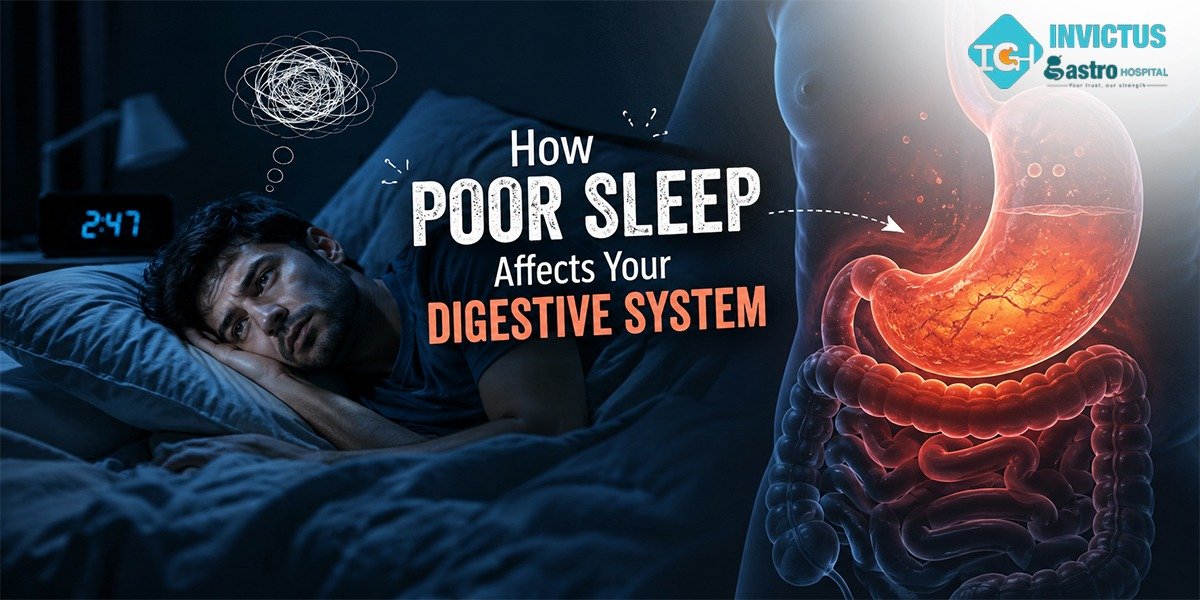
You are already aware that poor sleep leads to lack of focus, irritability, and fatigue. But here is something most people never connect. The same sleepless night may be causing digestive issues as well.
Poor sleep and digestive health are far more intertwined than most people realize. Your digestive system doesn’t simply turn off when you go to sleep. It still keeps going and is fixing the gut lining, balancing digestive hormones, and managing the trillions of bacteria that reside inside your gut. Break it down one night at a time, and the backlash will be felt in your stomach before anywhere else.
Bloating that will not go away. Recurrent acidity. Irregular bowel habits. Constant indigestion. If you experience any of these regularly and you also struggle with sleep, the two are almost certainly connected.
This article will tell you exactly how bad sleep and its effects impact your digestive system and what you can do to fix it.
Sleep and your digestive system share a deep, two-way relationship. Scientists even have a name for it: the gut sleep axis.
Here is how it works in both directions:
This means the problem feeds itself. A restless night worsens your gut. A troubled gut makes the next night worse. Breaking this cycle requires addressing both sides.
In deep sleep, your body repairs damage to the intestinal lining, regulates appetite hormones, and metabolizes nutrients you’ve taken in during the day. This whole process is derailed when sleep is shortened or broken up.
Extreme fatigue increases cortisol levels, the body’s primary stress hormone. High cortisol levels slow gastric emptying, leading to food remaining in the stomach longer than necessary. This causes bloating, heaviness after meals, and slow digestion even in the presence of a good diet.
The gut microbiome is composed of billions of bacteria that work together for digestion and immunity and require routine to function. Just some nights of poor sleep can lead to a decrease in the diversity of bacteria and allow an overgrowth of harmful bacteria. Dysbiosis is an imbalance that leads to inflammation in the gut, irregular bowel movements, and digestive discomfort.
Good sleep creates healthy short-chain fatty acids, which strengthen and keep the intestinal wall intact. This protection decreases if it is not taken care of. This leads to leaky gut, a more permeable gut wall that allows things that are supposed to remain within the digestive tract to enter the blood, causing inflammation throughout the body.
Sleep deprivation leads to an increase in the hormone ghrelin (which triggers hunger) and a decrease in the hormone leptin (which triggers fullness). This hormonal imbalance causes an urge to eat more fatty, sugary, and processed foods, which aggravate digestive issues and lead to reflux.
Yes. This is one of the best studied relationships between sleep and the digestive system.
Lying down eliminates the force of gravity that helps to keep stomach acid in the stomach. The valve that joins the food pipe to the stomach (the lower esophageal sphincter) relaxes more while asleep. Saliva production drops. Swallowing slows down. This all allows stomach acid to rise higher and remain in the esophagus longer.
Studies demonstrate that sleep deprivation is not only associated with an increase in reflux episodes. It also causes the esophagus to become sensitive to acids, which is known as esophageal hypersensitivity. Simply put, an acid reaction produces a lot more discomfort and pain in a dimmer, sleep-deprived state.
Of those patients with severe GERD symptoms, 70-75% will have heartburn during the night. Almost one in three reports that acid reflux symptoms interfere with sleep at least once a week.
The result is a vicious cycle:
Sleep issues and acid reflux do not occur independently. These are the same problems repeated and multiplied.
Poor sleep not only affects acidity. It worsens a range of digestive disorders:
Look out for these patterns. They frequently indicate that poor sleep and digestive issues are interacting:
If you have ever experienced any of these symptoms, then your sleeping routine should be scrutinized as much as your diet.
There’s no need for a complicated routine. These real-world adjustments can help make a significant impact:
Sleep is more than a time of rest. When your digestive system repairs, rebalances, and readies itself for the next day. If you’re constantly rushing through meals, your gut is suffering and will eventually catch up with you with a host of problems, including acidity, bloating, inflammation, and long-term digestive issues.
There is good news, though, because better sleep and gut health can go hand in hand. One and the other are typically improved as well.
However, if there is no improvement in your digestive symptoms, despite improving your sleep routine, it is time to seek a proper evaluation. Recurrent symptoms are not likely to be a lifestyle issue. There is usually something and something that seems to warrant investigation.
Dr. Ishan Shah is a top Gastro Surgeon and Digestive Health Specialist in Ahmedabad, having more than 10 years of experience in treating chronic digestive disorders such as GERD, acidity, IBS, and complex gastrointestinal disorders. He feels that only when you are aware of the underlying cause of the disease, and not merely the symptoms, can you hope for a permanent cure.
Schedule a consultation and make an impact on your gut health today.