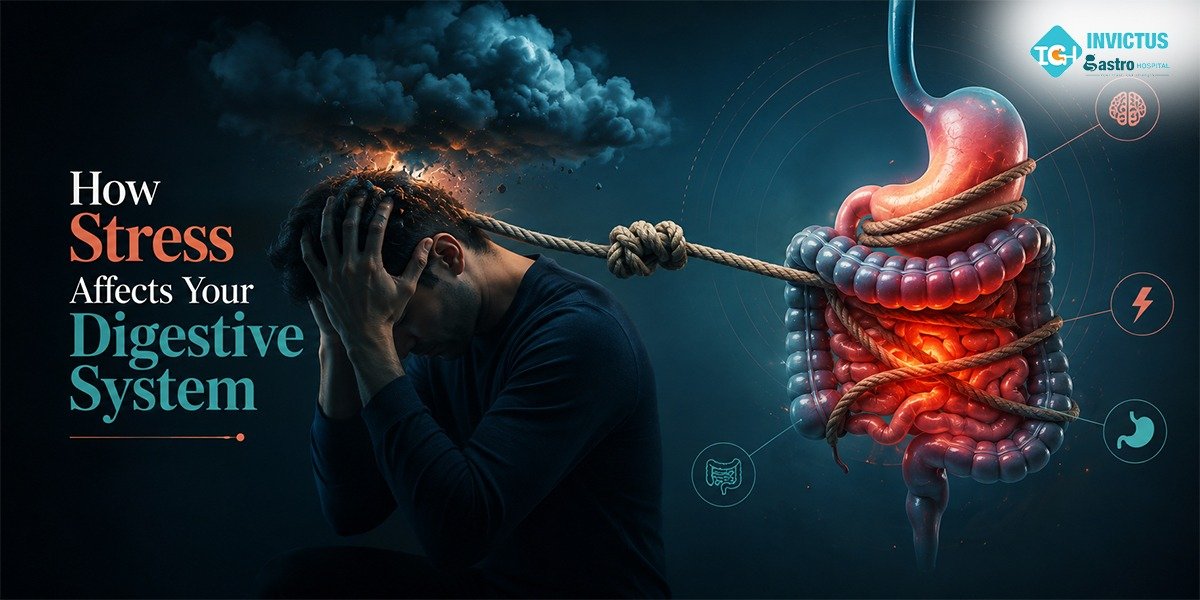
Your stomach churns before an important meeting. You lose your appetite after a difficult conversation. You feel nauseous before a flight. These are not random reactions. They are your gut responding directly to your mental state, and the science behind it is well established.
Stress and gut health are more closely linked than most people realize. Stress does not just affect your mood or your sleep. It disrupts one of the most complex and sensitive systems in your body. Understanding the effects of stress on digestion is the first step toward protecting yourself.
There are over 100 million nerve cells lining the wall of the digestive system. This is referred to as the enteric nervous system and is connected to the brain via the gut-brain connection, which is in constant communication. This is a bidirectional channel. Brain-Gut Communication: The brain affects the gut, and the gut affects the brain.
This axis is connected to the brain, and when stress is sensed by the brain, either from a pressing work deadline, a personal crisis, or low-level chronic stress, it triggers a signal that directly impacts the digestive system. Cortisol and other stress hormones are secreted. Blood is diverted from the digestive organs. Gut motility changes. The microbial flora of the gut changes.
The relationship of this is why so many people who suffer from anxiety also experience stomach issues, and so many people who suffer from chronic digestive issues experience increased psychological stress. The relationship is a two-way one.
Understanding the effects of stress on digestion helps explain why symptoms vary so much from person to person. The same stress response can produce completely different reactions depending on the individual. These are the most common digestive problems triggered by stress.
The stress brings about an increase in stomach acid production and reduces the strength of the lower oesophageal sphincter that shuts to block the stomach acid from rising. This leads to acid reflux, a burning sensation in the chest and throat, which many people try to treat with antacids. Many sufferers of stress will find that this is the main cause of their condition.
Muscles that line the gut contract in waves to propel food along through the gut. When the body is under stress, this coordination is interrupted, which leads to cramping, spasms, and overall abdominal discomfort. In IBS, stress and abdominal pain are directly and consistently related in humans.
The gut may speed up its contractions quite a bit in the fight-or-flight response. Food and waste are passed through the intestines more rapidly than normal, which is not enough time to allow water and nutrients to be absorbed. This leads to loose, urgent, and frequent bowel movements. This is a nervous system reaction that links stress and diarrhea.
Stress can also have a negative impact. When people are stressed, their digestive system slows down significantly in some people. The gut slows down, stools become hard and difficult to pass, and bowel movements are infrequent. Frequently, stress and constipation happen simultaneously, but the psychological aspect of the condition is frequently ignored entirely in the treatment process.
Stress affects the synthesis and function of digestive enzymes and thus makes food breakdown less efficient. It also changes the composition of the intestines’ bacteria and raises the permeability of the gut, leading to bloating, a lot of gas, and constant indigestion.
When there is acute stress, it often causes a loss of appetite and nausea due to the effects of cortisol and adrenaline. For long periods of stress, some people lose a lot of weight as they feel no urge to eat.
One stressful event disrupts the digestive activity temporarily. The body recovers, and the digestive system functions normally. Chronic stress is a whole different ballgame.
The digestive system is stuck in a state of chronic dysfunction when subjected to chronic stress, whether for weeks, months, or years. It is the time when stress is no longer a trigger but is a cause.