



- Posted By Dr. Ishan Shah
-
- Comments 0

Surgery is never a minor decision. Whether it is a gallbladder removal or a hernia repair, the question that almost all patients ask is the same. What is the surgical procedure?
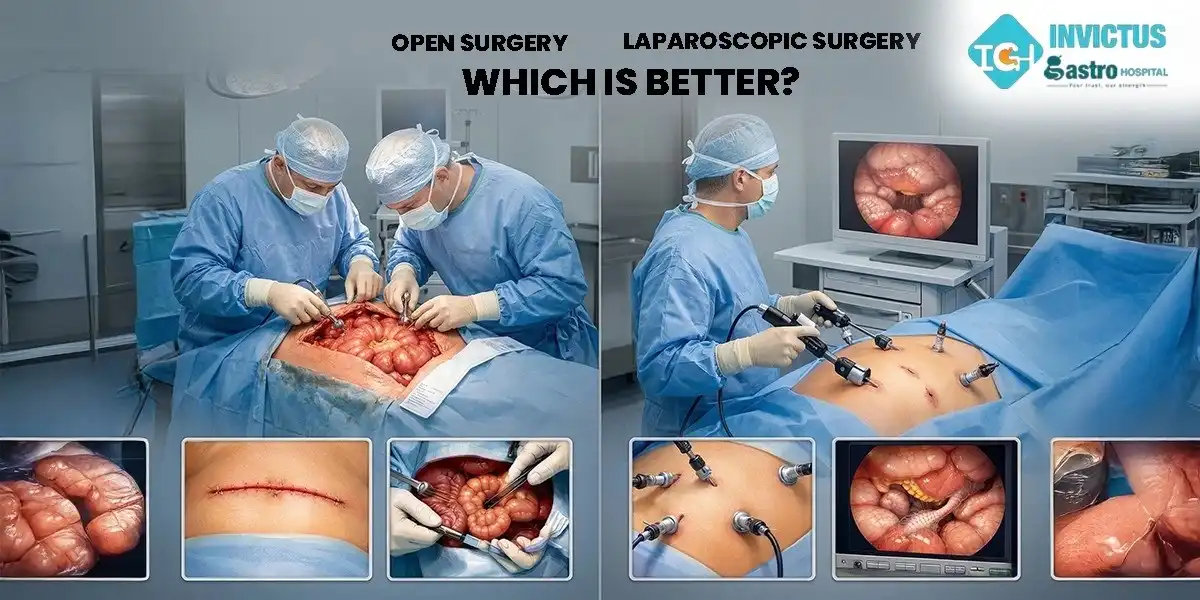
The surgeon of today can take into consideration two primary methods: one is open surgery, and the other is laparoscopic surgery. They both deal with the same conditions. However, it is in the way that they work and how your body feels after the work that the real difference comes in and how your experience will appear.
Knowledge about open vs. laparoscopic surgery before your surgery will make you walk into the hospital as an informed, not an anxious, person. You will understand what to expect, what questions to ask, and why your surgeon prefers a certain approach.
This guide breaks it down in simple terms. No medical jargon, just clear answers.
What is Laparoscopic Surgery?
Laparoscopic surgery is also a minimally invasive surgery in which the surgeon makes a few small incisions rather than a single large opening. One of these cuts is used to insert a small camera known as a laparoscope. It transmits a real-time picture to a screen, which directs a surgeon during the procedure.
What is laparoscopic surgery used for? A fair deal, indeed. Common abdominal operations that are performed in this manner include gallbladder removal, appendix surgery, hernia repair, bariatric surgery, and many others. The body experiences less trauma since the incisions are small. The healing process is quick, the stay in the hospital is reduced, and scarring is minimal.
It is also referred to as keyhole surgery. It has become the most common choice for abdominal and pelvic cases, provided the patient is an appropriate candidate.
Benefits of Laparoscopic Surgery
Increasing numbers of patients prefer laparoscopic surgery today, and the reasons are difficult to overlook. The smaller cuts are not the only benefits. Here is what makes this approach stand out.
Smaller Incisions, Minimal Scarring
In laparoscopic surgery, the incisions are minute. The majority of them are less than a centimeter in length. This translates to minimal visible scarring in comparison to open surgery, which is very important to patients who consider life after healing.
Less Pain After Surgery
Smaller incisions cause less tissue damage. Less tissue damage means less pain. Most patients need significantly fewer pain medications after a laparoscopic procedure compared to open surgery.
Faster Recovery
This is one of the most talked-about benefits of laparoscopic surgery. Many patients can walk within hours of the procedure. Going home the same day or the next day is common. Returning to normal daily activities happens much sooner than with open surgery.
Lower Risk of Infection
Smaller wounds mean less exposure to external bacteria. That directly reduces the risk of post-surgical infection, which is one of the most common complications after any operation.
Reduced Blood Loss
Laparoscopic surgery demands precision. The controlled movements and magnified camera view mean less bleeding during the procedure itself.
Better Visibility for the Surgeon
A high-definition camera gives the surgeon a magnified, detailed view inside the body. In many ways, this improves accuracy compared to what the naked eye sees in open surgery.
Quicker Return to Normal Life
Patients resume work, traveling, and everyday life much quicker. This is also usually among the most appreciated advantages of laparoscopic surgery among working professionals and busy families.
What is Open Surgery?
Open surgery is the classic method that surgeons have long been practicing. A larger incision is made to enable the surgeon to reach the organ or the area that is being treated.
Unlike laparoscopic surgery, in open surgery, the surgeon is allowed to use their hands. They can feel the tissue, halt the bleeding instantly, and handle complex situations more flexibly. It is this direct exposure that makes open surgery the preferred method of doing major cancer surgeries, large tumors, multiple organ involvement, and emergency surgery.
It is a well-proven methodology. In complex situations where accuracy and complete control cannot be compromised, open surgery is the most likely to be the safest route.
Benefits of Open Surgery
Better Surgical Visibility
Look at your cuts now. The redness fades. The sides come together. Surgical glue/stitches dissolve. How long for laparoscopic incisions to heal on the outside? Typically two to three weeks.
Suitable for Complex Procedures
Open surgery is usually needed in major cancer surgeries, reconstructions, and large tumor removals, and in emergency abdominal cases. In cases of severe conditions and complex anatomy, open surgery provides the surgeon with the necessary access and control.
Lower Risk to Surrounding Organs
Since the surgeon is in direct contact and has a full view, the risk of damaging nearby organs is greatly minimized. In that regard, open surgery provides some degree of accuracy, which is achieved through physical control.
Time-Tested and Widely Practiced
Open surgery has decades of experience among surgeons around the world. That familiarity is translated to confidence, particularly in high-stakes situations.
Open Surgery vs Laparoscopic Surgery: Key Differences
The most fundamental difference in open vs. laparoscopic surgery comes down to one thing: the size of the incision. But that one difference changes almost everything, from how long you stay in the hospital to how quickly you get back to your life.
Here is a simple side-by-side comparison to help you understand both approaches clearly.
| Factor | Open Surgery | Laparoscopic Surgery |
| Incision Size | Large, several inches long | Small, less than 1 cm |
| Pain After Surgery | Higher needs stronger medication | Lower, fewer medications needed |
| Recovery Time | Several weeks to months | 1 to 2 weeks for most patients |
| Hospital Stay | 3 to 7 days typically | Same day or 1 night |
| Scarring | Visible, larger scar | Minimal, barely noticeable |
| Blood Loss | More bleeding possible | Significantly reduced |
| Infection Risk | Higher due to a larger wound | Lower due to smaller incisions |
| Surgical Visibility | Direct, hands-on view | Magnified camera view on the monitor |
| Best Suited For | Complex, emergency, major cancer cases | Routine abdominal and GI procedures |
| Surgeon Control | Full tactile and visual control | Instrument-based precision |
Conclusion
Choosing laparoscopic surgery or open surgery is not a choice that you make. Your surgeon studies your condition, health history, and the complexity of your case and proposes the right direction for you. The thing is that I am in the right hands.
Dr. Ishan Shah has over 10 years of experience in laparoscopic and gastrointestinal surgery for patients in Ahmedabad. He is a well-known laparoscopic surgeon in Ahmedabad and has performed more than 5500 successful laparoscopic surgeries on different cases, including gallbladder, hernia, and more complicated pancreatic and liver surgeries.
Book your consultation today and take the first step toward a confident, informed recovery.


Recent Posts
- Liver Transplant Success Rate in India: What Patients Should Know
- How Poor Sleep Affects Your Digestive System
- Piles Surgery Cost in Ahmedabad: What Determines the Price
- Stomach Cancer Surgery in Ahmedabad: Types, Procedure & Recovery
- Gallbladder Stones: Symptoms, Diagnosis, Treatment Options, and Recovery After Surgery
Recent Comments
No comments to show.
