



- Posted By Dr. Ishan Shah
-
- Comments 0

As the temperature drops and winter sets in, our body’s nutritional needs change completely. Just like summer calls for light, hydrating foods, winter demands warm, nourishing and energy-dense meals that keep the body strong from the inside. Choosing the best foods for winter diet can help you fight seasonal colds, maintain energy levels, support digestion, and keep your skin and joints healthy through the cold months.
In this detailed guide, we cover the best healthy winter foods, backed by real nutrition statistics, the specific health benefits of each food, foods you should avoid, practical tips, and a sample winter meal plan to help you stay fit and active all season long.
Why Is a Healthy Winter Diet Important?
During winter, the body naturally slows down its metabolism to conserve heat, and immunity tends to dip due to lower sunlight exposure and dry air. This is why seasonal illnesses like cold, cough, and flu are more common in winter. A well-planned winter diet helps in the following ways:
- Keeps the body warm from within
- Strengthens immunity against seasonal infections
- Improves digestion, which tends to slow down in cold weather
- Provides sustained energy to fight fatigue and lethargy
- Maintains healthy skin and prevents dryness
- Supports joint health, which is often affected by cold temperatures
Including the right healthy food habits in winter season can make a noticeable difference in how your body copes with the cold.
Best Foods for Winter Diet (With Nutrition Facts & Benefits)
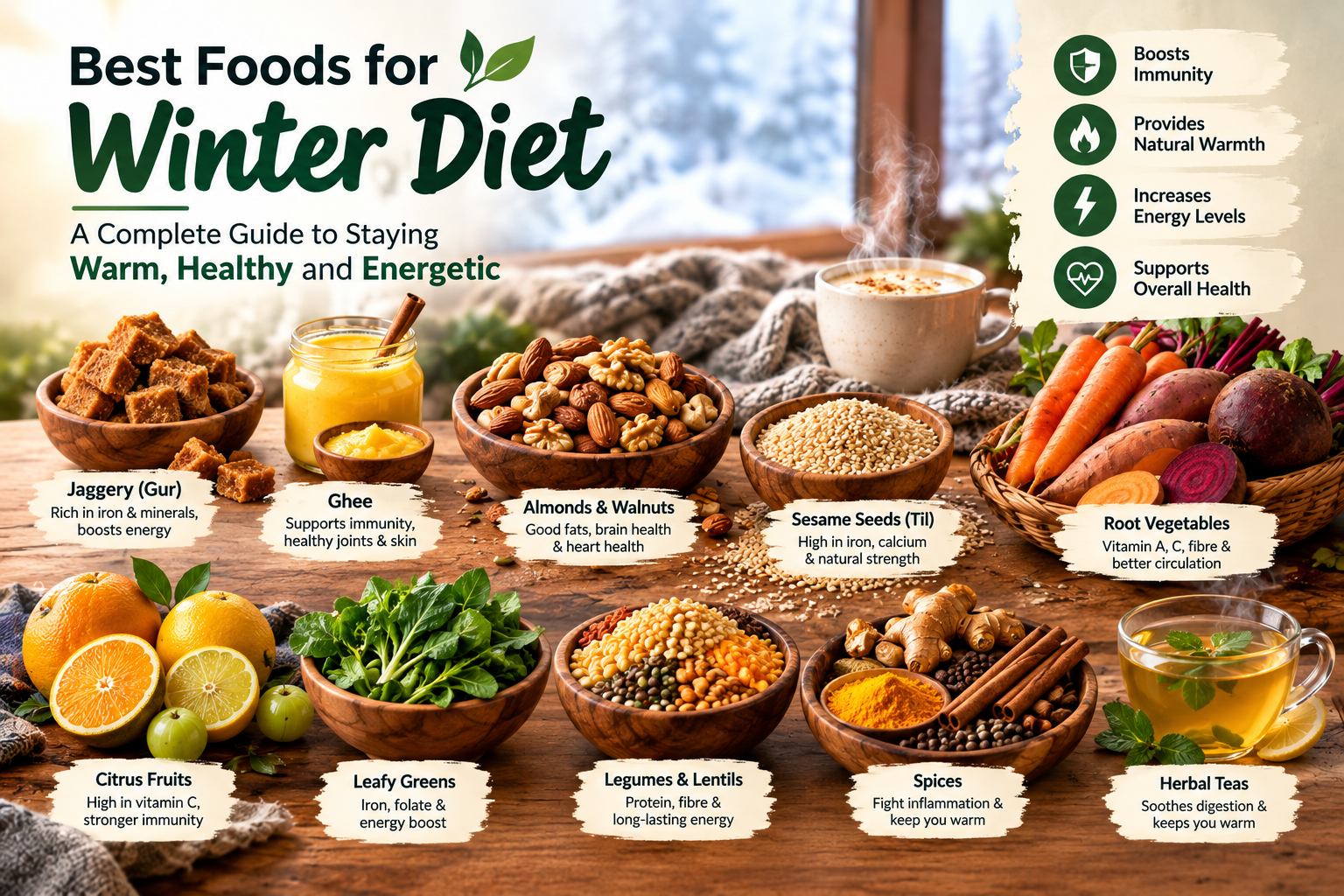
Here is a detailed, research-backed list of the most effective winter superfoods, along with their nutrition statistics and the specific health benefits they offer.
1. Jaggery (Gur)
Jaggery is one of the most trusted winter foods in Indian households. Unlike refined white sugar, it retains the natural minerals of sugarcane, making it a genuinely nutritious sweetener when eaten in moderation.
Key Nutrition Facts (per 100g):
- Energy: ~383 kcal
- Iron: ~11 mg (compared to almost 0 mg in white sugar)
- Potassium: ~1,050 mg
- Calcium: ~80 mg
- Magnesium: ~70 mg
Health Benefits:
- Good for health as a natural source of iron, which helps prevent anaemia and supports haemoglobin production
- Its potassium and magnesium content supports muscle function and energy metabolism
- Traditionally used after meals to aid digestion and reduce bloating
- Generates internal body warmth, making it ideal for the winter season
- A far better choice than refined sugar since it retains minerals lost during sugar processing
Note: Jaggery still has a high glycaemic index, so people with diabetes should consume it in limited amounts.
2. Ghee (Clarified Butter)
Ghee has been used in Indian kitchens for centuries, and winter is when it truly shines as a health food.
Key Nutrition Facts (per tablespoon, ~13g)
- Energy: ~112 kcal
- Fat: 100% from healthy saturated and monounsaturated fats
- Contains fat-soluble vitamins A, D, E and K
- Butyrate content (a short-chain fatty acid) supports gut health
Health Benefits:
- Good for health as it helps the body absorb fat-soluble vitamins from other foods
- Supports immunity and reduces inflammation when consumed in moderation
- Lubricates joints, which is especially useful during cold weather when joint stiffness is common
- Provides a concentrated source of energy that helps maintain body warmth
- Supports skin hydration from within, countering the dryness caused by winter air
3. Almonds and Walnuts
Dry fruits and nuts are among the most nutrient-dense winter diet foods, and almonds and walnuts are the clear standouts.
Key Nutrition Facts (per 100g):
- Almonds: 584 kcal, Vitamin E 25.6 mg (about 171% of daily value), Protein 21.5 g, Fibre 10.8 g
- Walnuts: 654 kcal, Omega-3 (ALA) ~9,000 mg, Protein 15.2 g, Magnesium ~40% of daily value
Health Benefits:
- Almonds are an excellent source of Vitamin E, a powerful antioxidant that protects cells and supports healthy, glowing skin during dry winter months
- Walnuts contain more plant-based Omega-3 fatty acids than any other nut, which supports heart health and reduces inflammation
- Both nuts are good for health as they support brain function, provide healthy fats for sustained energy, and help keep the nervous system strong in cold weather
- Regular consumption (a handful daily) has been linked to better cholesterol balance and improved satiety
4. Sesame Seeds (Til)
Sesame seeds are a traditional winter food, commonly eaten as til-gud laddoos or added to warm dishes.
Key Nutrition Facts (per 100g):
- Energy: ~565 kcal
- Iron: ~14.6 mg (one of the highest plant-based sources of iron)
- Protein: ~17 g
- Fibre: ~14 g
Health Benefits:
- Extremely good for health due to their exceptionally high iron content, which supports haemoglobin levels and helps prevent winter fatigue
- Rich in calcium, which supports bone strength, especially important as bones can feel stiffer in cold weather
- Healthy fat content helps generate body heat naturally
- Combining sesame seeds with jaggery (as in traditional laddoos) provides a warming, energy-dense snack for winter
5. Root Vegetables (Carrots, Sweet Potatoes, Beetroot)
Root vegetables are in peak season during winter and are among the most beneficial healthy winter foods available.
Key Nutrition Facts (per 100g):
- Carrots: 41 kcal, Vitamin A ~835 mcg (over 100% of daily requirement), Potassium 320 mg
- Sweet potatoes: 86 kcal, Beta-carotene ~8,509 mcg, Vitamin C, Potassium 337 mg
- Beetroot: 43 kcal, Folate, dietary nitrates that support blood flow
Health Benefits:
- Carrots are an excellent source of beta-carotene, which the body converts to Vitamin A, supporting immunity and eye health during the darker winter months
- Sweet potatoes provide both Vitamin A and Vitamin C together, making them one of the most complete immunity-boosting vegetables
- Beetroot supports healthy blood circulation, which helps in maintaining warmth throughout the body
- All root vegetables are fibre-rich, supporting digestion which tends to slow down in winter
6. Citrus Fruits (Orange, Amla, Sweet Lime)
Citrus fruits are widely regarded as the best immunity boosting foods for winter because of their high Vitamin C content.
Key Nutrition Facts (per 100g):
- Orange: 47 kcal, Vitamin C ~53 mg (about 59% of daily value)
- Amla (Indian gooseberry): one of the richest natural sources of Vitamin C, containing several times more than an orange
- Sweet lime: good source of Vitamin C, potassium and antioxidants
Health Benefits:
- Good for health as Vitamin C is directly linked to a stronger immune response, helping the body fight seasonal colds and flu
- Acts as a powerful antioxidant, protecting cells from damage caused by winter dryness and pollution
- Supports collagen production, which keeps skin firm and healthy despite the cold, dry air
- Regular intake has been associated with reduced duration and severity of common colds
7. Leafy Greens (Spinach, Fenugreek, Mustard Greens)
Leafy greens are abundant in winter and are considered some of the most nutrient-dense winter diet foods
Key Nutrition Facts (per 100g, raw spinach):
- Energy: 23 kcal
- Iron: ~2.7 mg (about 15–22% of daily value)
- Vitamin K: ~483 mcg (over 400% of daily value)
- Vitamin A: high, along with folate ~194 mcg (about 49% of daily value)
Health Benefits:
- Good for health as they are extremely low in calories yet dense in iron, folate and vitamin K, supporting blood health and bone strength
- Fenugreek leaves and mustard greens are traditionally used in winter for their warming properties and digestive benefits
- The high folate content supports red blood cell formation, helping combat winter fatigue
- Regular consumption supports eye health, immune function and healthy blood clotting
Tip: Pairing leafy greens with a Vitamin C-rich food (like lemon juice) improves iron absorption, since the iron in greens is non-heme and less easily absorbed on its own.
8. Ginger, Garlic and Turmeric
These three kitchen staples are considered natural medicine in most Indian households, particularly during winter.
Key Nutrition Facts:
- Ginger contains gingerol, a bioactive compound known for anti-inflammatory and antioxidant effects
- Garlic contains allicin, a sulfur compound linked to antimicrobial properties
- Turmeric contains curcumin, a well-researched anti-inflammatory antioxidant compound
Health Benefits:
- Ginger is good for health as it helps soothe sore throats, supports digestion, and has warming properties that make it ideal for cold weather
- Garlic has natural antibacterial and antiviral properties that support the immune system against seasonal infections
- Turmeric's curcumin content helps reduce inflammation, which is particularly useful for people who experience joint pain in winter
- A warm cup of ginger tea, turmeric milk (haldi doodh), or kadha before bed is a time-tested remedy for winter colds and cough
9. Whole Grains and Millets (Bajra, Jowar)
Millets like bajra (pearl millet) are traditional winter staples in states like Gujarat, Rajasthan, and Maharashtra.
Key Nutrition Facts (per 100g, bajra):
- Energy: ~361 kcal
- Protein: ~11 g
- Fibre: ~11.5 g
- Rich in magnesium, iron, zinc and copper
- Low glycaemic index compared to refined grains
Health Benefits:
- Good for health due to their low glycaemic index, which helps maintain stable blood sugar levels
- High fibre content supports digestion and keeps you fuller for longer, useful for controlling winter weight gain
- Rich mineral content supports heart health, muscle function and skin health
- Naturally gluten-free, making bajra roti a suitable option for those with gluten sensitivity
10. Warm Soups, Dal and Stews
Warm, cooked meals are easier to digest in winter compared to cold or raw foods.
Key Nutrition Facts:
- A typical vegetable-and-lentil soup provides a balanced mix of protein, fibre, vitamins and minerals depending on the vegetables and lentils used
- Dal (lentils) are a good source of plant protein, providing roughly 18–25 g of protein per 100g (dry weight, varies by type)
Health Benefits:
- Good for health as warm liquids help maintain body temperature and keep the body hydrated, since people tend to drink less water in winter
- Easier on digestion compared to raw, cold foods, especially important as metabolism slows in cold weather
- A great way to include multiple vegetables and pulses in one meal, maximising nutrient intake
- Comforting and satisfying, which can help curb unhealthy snacking during winter
11. Eggs, Chicken and Fish
For non-vegetarians, these are excellent winter protein sources.
Key Nutrition Facts (per 100g):
- Eggs: ~155 kcal, ~13 g protein, rich in Vitamin D and B12
- Chicken breast: ~165 kcal, ~31 g protein
- Fish (like salmon): rich in Omega-3 fatty acids and protein
Health Benefits:
- Good for health as high-quality protein supports muscle repair and keeps the immune system functioning properly
- Eggs are one of the few natural food sources of Vitamin D, which is often low in winter due to reduced sunlight exposure
- Omega-3 fatty acids in fish support heart and brain health while reducing inflammation
- Protein-rich meals help maintain satiety and steady energy levels through the day
12. Pulses, Legumes and Paneer
For vegetarians, pulses and paneer are excellent alternatives to meet protein requirements in winter.
Key Nutrition Facts (per 100g):
- Chickpeas: ~2.9 mg iron, high in fibre and folate
- Paneer: ~18 g protein, good source of calcium
Health Benefits:
- Good for health as they provide plant-based protein along with fibre, supporting muscle maintenance and digestion
- Iron and folate content supports healthy blood formation, helping fight winter fatigue
- Calcium in paneer supports bone health, which is important as bones tend to feel stiffer in cold weather
- A versatile, filling addition to soups, curries and salads
13. Dates
Dates are naturally sweet and are commonly used as a healthy alternative to processed sugar in winter.
Key Nutrition Facts (per 100g):
- Energy: ~277 kcal
- Potassium: ~696 mg
- Fibre: ~6.7 g
- Natural sugars along with magnesium and B vitamins
Health Benefits:
- Good for health as they provide quick, natural energy along with fibre that slows sugar absorption compared to refined sugar
- Potassium content supports healthy blood pressure and muscle function
- A convenient winter snack that helps maintain warmth and prevent fatigue
- Often combined with nuts and seeds to make energy balls, a popular healthy winter snack
14. Pumpkin Seeds
These small seeds are a nutrient powerhouse, often overlooked in everyday diets.
Key Nutrition Facts (per 100g):
- Zinc: significant contributor to daily requirement
- Magnesium: rich source
- Omega-3 fatty acids present in meaningful amounts
Health Benefits:
- Good for health as zinc plays a direct role in immune function, helping the body fight off seasonal infections
- Magnesium supports muscle relaxation and better sleep, which can be disrupted in cold weather
- A convenient roasted snack that adds crunch and nutrition to winter meals and salads
15. Herbal and Spiced Teas (Kadha, Cinnamon Tea)
Traditional herbal drinks are a comforting and functional part of the winter diet.
Key Nutrition Facts:
- Kadha typically combines tulsi, ginger, black pepper and cinnamon - each contributing antioxidant and antimicrobial compounds
- Cinnamon contains cinnamaldehyde, linked to anti-inflammatory effects
Health Benefits:
- Good for health as the combination of herbs and spices supports the immune system and soothes the throat
- Helps improve digestion and reduces bloating after heavy winter meals
- Provides warmth and hydration, encouraging people to drink more fluids even when they feel less thirsty in cold weather
Foods to Avoid in Winter
While including the right foods is important, avoiding certain foods can be equally beneficial for your winter health:
- Cold beverages and ice-cold drinks – they can worsen throat irritation and slow digestion
- Excess caffeine – can lead to dehydration despite the cold weather
- Heavy fried and processed foods – harder to digest and can cause sluggishness
- Refined sugar and sugary snacks – provide empty calories and can weaken immunity over time
- Excess raw, cold salads – can be harder to digest in cold weather compared to lightly cooked vegetables
Practical Tips for a Healthy Winter Diet
- Drink warm water and herbal teas throughout the day instead of cold beverages
- Include seasonal fruits and vegetables in every meal for maximum nutrient density
- Don't skip breakfast, as the body needs extra energy in cold weather
- Add healthy fats like ghee and nuts in moderation to your daily diet
- Exercise regularly, as physical activity also helps generate body heat
- Get enough sunlight exposure for natural Vitamin D production
- Stay hydrated even if you don't feel as thirsty as you do in summer
Conclusion
Including the best foods for winter diet in your daily routine can significantly improve how your body handles the cold season. From immunity-boosting citrus fruits and warming spices to nutrient-dense dry fruits and seasonal vegetables, each food discussed above comes with specific, science-backed benefits — whether it’s the iron in sesame seeds and jaggery, the Vitamin E in almonds, or the Vitamin C in citrus fruits.
By making small, consistent changes to your healthy food habits in winter season and understanding exactly why each food is good for health, you can enjoy the cold months while staying strong, energetic, and protected from seasonal illnesses.
Frequently Asked Questions (FAQs)
Q1. What are the best foods to eat in winter?
Jaggery, ghee, dry fruits, root vegetables, citrus fruits, and leafy greens are among the best foods to eat in winter for warmth, immunity and sustained energy.
Q2. Which foods help boost immunity in winter?
Citrus fruits (rich in Vitamin C), ginger, garlic, turmeric, and leafy greens are excellent immunity boosting foods for winter due to their high vitamin, antioxidant and antimicrobial content.
Q3. What foods should be avoided in winter?
Cold beverages, excess caffeine, fried and processed foods, and refined sugar should be limited during winter as they can weaken digestion and immunity.
Q4. Is ghee good for winter health?
Yes, ghee provides healthy fats, supports immunity, helps in the absorption of fat-soluble vitamins, and keeps joints lubricated, making it especially beneficial during winter.
Q5. Which winter foods are highest in iron?
Sesame seeds (~14.6 mg per 100g) and jaggery (~11 mg per 100g) are among the richest winter foods in iron, making them useful for preventing winter fatigue and supporting healthy haemoglobin levels.
Q6. What is a good winter breakfast option?
A warm breakfast like vegetable paratha, bajra porridge, or oats with dry fruits is ideal for sustained energy during winter mornings.

Recent Posts
- Best Foods for Winter Diet: A Complete Guide to Staying Warm, Healthy and Energetic
- What Tests Does a Liver Specialist Recommend for Liver Problems?
- What to Expect During a Consultation With a Stomach Surgeon in Ahmedabad
- Questions to Ask Before Choosing a Laparoscopic Surgeon in Ahmedabad
- 5 Factors to Consider Before Choosing Best Gastro Surgeon in Ahmedabad
Recent Comments
No comments to show.
