-
Posted By Dr. Ishan Shah
-
-
Comments 0
Most people never think about their gallbladder until it starts causing problems. This small, pear-shaped organ sits just below your liver and stores bile, a digestive fluid that helps break down fats. When that bile becomes too concentrated, it can harden into solid deposits called gallstones.
Gallbladder stones are far more common than most people realize. Millions of people across India live with gallstones, and many do not even know it until a sudden, severe pain brings them to the emergency room.Whether you have been suffering from a chronic gastrointestinal disorder or more recently experiencing gastrointestinal symptoms or simply need a professional opinion on symptoms you may be suffering from, Dr. Ishan Shah will provide you with the answers, an accurate diagnosis, and customized treatment based on your condition.
If you have been experiencing upper abdominal pain after meals, nausea, or discomfort around your right shoulder, this guide is for you. Here is everything you need to know about gallbladder stone symptoms, diagnosis, treatment, and what recovery looks like after surgery.
What Are Gallbladder Stones?
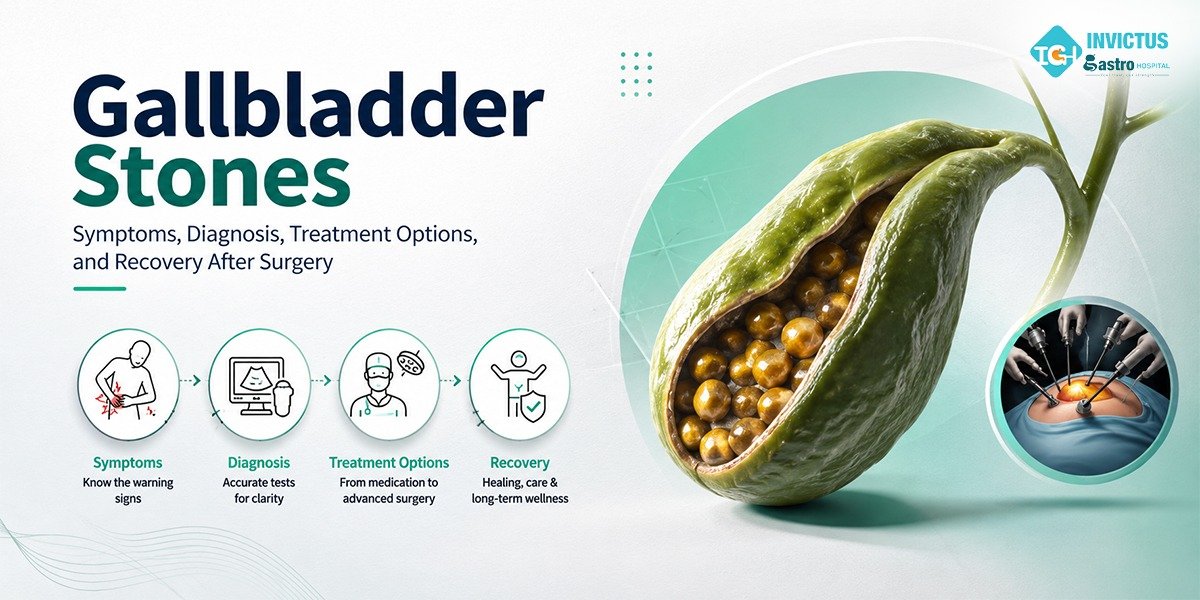
Gallstones are solid chunks that develop in the gallbladder. They form when the contents of the bile (mainly cholesterol or bilirubin) congeal in time and crystallize.
They could be very different in size. Some are as small as a grain of sand. Others can be as big as a golf ball. If a stone, either one or more, clogs the bile duct(s), it can cause a lot of pain and complications.
Here is what sets him apart:
- Cholesterol stones — The most common form, which occurs when there is a lot of cholesterol in the bile.
- Pigment stoness — Smaller and darker, they are created from extra bilirubin and are usually associated with liver or blood diseases.
His gentler first approach is that every consultation is comprehensive, every diagnosis is accurate, and every treatment plan is customized to the individual in his/her chair.
Gallbladder Stone Symptoms
Some people with gallstones don’t have any symptoms. These are known as silent gallstones and do not need to be treated immediately. But when a stone blocks a bile duct or irritates the gallbladder wall, the symptoms can come on quickly and intensely.
The most common gallbladder stone pain and symptoms include:
- Suddenly, severe pain in the upper right abdomen.
- Right shoulder or right between the shoulder blades pain that radiates down the arm or to the front of the shoulder blade.
- After eating fatty foods, nausea and vomiting occur.
- Fever and chills (which is an indication of gall bladder infection)
- Jaundice (yellow skin or eyes), due to a blocked bile duct
- Increased urine (dark) and decreased stool color (pale gray)
The pain associated with gallstones usually comes on in a few hours after meals and is usually caused by a fatty, heavy meal. May last up to 30 minutes or more. When the pain is associated with fever and jaundice, it is a medical emergency.
Gallbladder Infection Symptoms: When It Becomes Urgent
If a gallstone becomes stuck and obstructs the gall bladder, the gall bladder can become inflamed and infected. This is known as cholecystitis and is a medical emergency.
Look out for the following signs and symptoms of gallbladder infection:
- Suddenly, severe pain in the upper right abdomen.
- Right shoulder or right between the shoulder blades pain that radiates down the arm or to the front of the shoulder blade.
- After eating fatty foods, nausea and vomiting occur.
- Bloating and indigestion
- Fever and chills (which is an indication of gall bladder infection)
- Jaundice (yellow skin or eyes), due to a blocked bile duct
- Increased urine (dark) and decreased stool color (pale gray)
The pain associated with gallstones usually comes on in a few hours after meals and is usually caused by a fatty, heavy meal. May last up to 30 minutes or more. When the pain is associated with fever and jaundice, it is a medical emergency.
Gallbladder Infection Symptoms: When It Becomes Urgent
If a gallstone becomes stuck and obstructs the gall bladder, the gall bladder can become inflamed and infected. A Gall Bladder Surgeon in Ahmedabad can diagnose and treat this condition promptly, as it is known as cholecystitis—a serious infection and inflammation of the gall bladder that requires immediate medical attention.
Look out for the following signs and symptoms of gallbladder infection:
- High temperature and fever.
- This pain continues after a few hours.
- Pain on palpation of the upper right abdomen
- Jaundice (Yellowing of eyes or skin)
If you have any of these, don’t delay. Please seek medical attention as soon as possible.
How Are Gallbladder Stones Diagnosed?
| Diagnostic Test | What It Does |
| Ultrasound | The most common and reliable test for detecting gallstones. Quick, painless, and highly accurate |
| CT Scan | Provides detailed imaging when ultrasound results are unclear or complications are suspected |
| MRI or MRCP | Used to check for stones inside the bile ducts that an ultrasound may miss |
| HIDA Scan | Evaluates how well the gallbladder is functioning and detects blockages |
| Blood Tests | Detect infection, inflammation, elevated bilirubin, or liver enzyme abnormalities |
An ultrasound is usually the first and most important test. It can detect stones within minutes and help your doctor decide the next steps.
When the appointment is confirmed, the team will inform you what you need to do before the visit.
Gallbladder Stone Treatment Options
Treatment will depend on whether or not your stones are causing symptoms and the severity of those symptoms.
1. Watchful Waiting
If you don’t have any symptoms from your gallstones, your doctor might suggest watching them for now. There are lifestyle changes that can help prevent them from happening again, such as limiting the amount of fatty foods you eat.
2. Medications
Over time, certain medications are able to dissolve cholesterol-based gallstones. This method, however, requires months or even years of treatment, and stones will tend to recur. It is usually only recommended for patients who cannot undergo surgery.
3. Gallbladder Stone Surgery
Symptomatic gallstones are best treated with surgery, which is permanent. There are two options:
| Type of Surgery | Incision | Hospital Stay | Recovery Time |
| Laparoscopic Gallbladder Surgery | 3 to 4 small cuts | Same day or 1 night | 1 to 2 weeks |
| Open Gallbladder Surgery | One large incision | 3 to 5 days | 4 to 8 weeks |
Today, the gold standard treatment is laparoscopic gallbladder surgery (laparoscopic cholecystectomy). It is minimally invasive, takes about 60 to 90 minutes, and most patients go home the same day or the next morning.
Open gallbladder surgery is used only for complex cases, in cases of severe gallbladder infection, or when laparoscopic surgery cannot be performed.
Recovery After Gallbladder Removal Surgery
Recovery after laparoscopic gallbladder surgery is generally smooth and fast. Here is what to expect:
Week 1
- Mild to moderate pain at the incision sites, manageable with medication
- Rest is essential; avoid lifting anything heavy
- Eat light, low-fat meals only
- Most patients can walk around the same day
Week 2
- Pain reduces significantly
- You can return to light daily activities and desk work
- Continue avoiding fatty, fried, or rich foods
- No driving until pain medication is stopped
Weeks 3 to 4
- Most patients feel close to normal
- Moderate physical activity can resume gradually
- Follow up with your surgeon to confirm healing
After 4 to 6 Weeks
- Full recovery for most laparoscopic patients
- You can return to exercise, a normal diet, and all regular activities
- Open surgery patients may need the full 6 to 8 weeks
- Jaundice (Yellowing of eyes or skin)
Dietary Tips After Gallbladder Removal
Your gall bladder is no longer able to store bile, and it flows straight from the liver to the small intestine. This means:
- Have smaller meals more often and less.
- For the first couple of weeks, avoid all kinds of oily, greasy, and spicy food.
- Add fiber slowly to promote digestion
- Drink plenty of liquids all day long!
Most people do not have any long-term digestive problems, and most patients can get used to life without a gallbladder in a few weeks.
Conclusion
Gallstones are a very common condition in the gallbladder that is readily treatable. It’s important not to ignore signs and symptoms. If left untreated, this pain can turn into a gallbladder infection, a blockage in the bile ducts, or an emergency.
Today, gall bladder stone removal is a much safer, quicker, and less disruptive procedure, as it has become a laparoscopic surgery. The majority of patients are fully functional within days.
Dr. Ishan Shah is among Ahmedabad’s best laparoscopic surgeons, who has more than 10 years of experience in the field of gallbladder stone surgery and minimally invasive gastrointestinal surgeries. He has performed over 5500 successful laparoscopies and brings skill, experience, and caring to all cases
Don’t wait another minute to get help if you’re having any pain from gallbladder stones or have been told you have gallstones. Book a consultation with Dr. Ishan Shah today.
Recent Posts
- Gallbladder Stones: Symptoms, Diagnosis, Treatment Options, and Recovery After Surgery
- Book Dr. Ishan Shah Appointment: Ahmedabad’s Trusted Gastro Surgeon
- When Does Acidity Become a Serious Medical Problem?
- How Stress Affects Your Digestive System
- Why do so many patients travel from outside Gujarat to see Dr. Ishan Shah?
Recent Comments
No comments to show.