



- Posted By Dr. Ishan Shah
-
- Comments 0

Liver problems can develop gradually, and many people may not notice symptoms until the condition has progressed. Fatty liver, hepatitis, cirrhosis, liver infections, bile duct disorders, and other liver conditions can have very different causes and treatment approaches. This is why proper evaluation is important when liver-related symptoms or abnormal test results appear.
If you are looking for a liver specialist in Ahmedabad, one of the first steps is usually a detailed consultation followed by selected blood tests, imaging studies, or other investigations based on your symptoms and medical history.
A liver doctor in Ahmedabad may recommend different tests depending on whether the concern is abnormal liver enzymes, jaundice, fatty liver, abdominal discomfort, hepatitis, suspected fibrosis, or another liver-related condition. Not every patient needs every test.
Dr. Ishan Shah is a gastroenterologist and specialist surgeon in Ahmedabad who provides care for liver and related digestive-system conditions. His services include liver care and liver transplantation, along with treatment for biliary, gallbladder, pancreatic, and other gastrointestinal conditions.
When Should You See a Liver Specialist?
A liver specialist consultation may be recommended if you have persistent symptoms or abnormal results from routine health testing.
Common signs that may require medical evaluation include:
- Yellowing of the eyes or skin
- Dark urine or unusually pale stools
- Persistent fatigue or weakness
- Unexplained weight loss
- Abdominal pain or discomfort
- Abdominal swelling
- Swelling in the legs
- Abnormal liver enzyme results
- A fatty liver detected on an ultrasound
- A history of hepatitis
- A history of significant alcohol consumption
Some liver conditions can have few or no noticeable symptoms, particularly in their earlier stages. For example, fatty liver disease may be discovered incidentally during blood tests or abdominal imaging.
For this reason, an appropriate liver health checkup can be useful when a doctor identifies risk factors or abnormal findings.
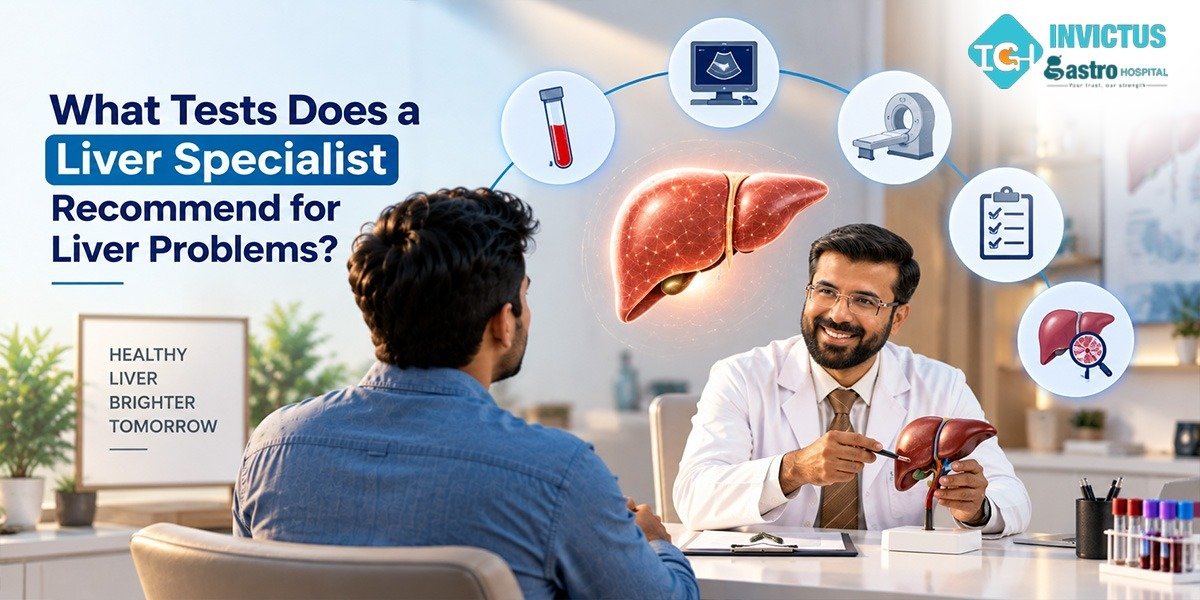
What Tests Does a Liver Specialist Recommend?
There is no single test that can diagnose every liver condition. A specialist generally combines your medical history, physical examination, blood tests, and imaging findings to understand what may be affecting the liver.
Here are some of the commonly recommended tests to diagnose liver disease.
1. Liver Function Tests
Liver function tests, often called LFTs, are among the most commonly requested blood tests when liver disease is suspected.
- ALT (alanine aminotransferase)
- AST (aspartate aminotransferase)
- Alkaline phosphatase (ALP)
- Bilirubin
- Albumin
- Other proteins and enzymes
Depending on the panel, these tests can measure substances such as:
Abnormal results can provide clues about liver injury, bile flow problems, or how well the liver is performing certain functions. However, an abnormal liver test does not automatically mean that a person has a specific liver disease. Results need to be interpreted in the context of symptoms, medical history, and other investigations.
A liver specialist in Ahmedabad may therefore recommend additional tests instead of relying on LFT results alone.
2. Complete Blood Count (CBC)
A CBC measures different types of blood cells, including red blood cells, white blood cells, and platelets.
In people with advanced liver disease, changes in blood counts can provide additional information about possible complications or associated conditions. For example, a low platelet count can sometimes be associated with advanced liver disease and portal hypertension.
A CBC is therefore often considered alongside liver tests when evaluating a patient.
3. Viral Hepatitis Tests
Hepatitis B and hepatitis C can cause liver inflammation and, in some people, long-term liver damage.
If your symptoms, medical history, or liver blood tests suggest a possible viral infection, a doctor may recommend specific blood tests for hepatitis.
Additional testing may sometimes be required to determine whether an infection is recent or chronic and to understand the level of viral activity or liver damage.
This is one reason a liver specialist consultation Ahmedabad should be personalized rather than based on a standard package of tests for everyone.
4. Ultrasound of the Liver
An abdominal ultrasound is a commonly used imaging test for evaluating the liver.
It can help doctors examine the liver’s size, shape, and general appearance. It may also identify features such as fatty changes, abnormalities in the liver, or problems involving the bile ducts.
Ultrasound uses sound waves rather than X-rays and is generally a non-invasive imaging method.
A doctor may recommend an ultrasound as part of a liver health checkup, particularly when there are abnormal liver tests, abdominal symptoms, or risk factors for liver disease.
5. FibroScan or Liver Elastography
Sometimes the important question is not simply whether the liver is abnormal, but whether it has developed fibrosis or scarring.
Elastography is a non-invasive technique that measures liver stiffness. One commonly used form is vibration-controlled transient elastography, often known by the brand name FibroScan.
Higher liver stiffness can be associated with fibrosis. Elastography may therefore help doctors assess the likelihood and extent of liver scarring without immediately requiring a biopsy.
The need for this test depends on the patient’s condition and previous test results.
6. CT Scan or MRI
If an ultrasound does not provide enough information, or if a doctor needs more detailed imaging, a CT scan or MRI may be recommended.
These imaging techniques can provide more detailed information about the liver and surrounding structures. Depending on the clinical situation, they may help evaluate suspected tumors, cirrhosis-related changes, vascular abnormalities, or other structural problems.
The choice between ultrasound, CT, MRI, or another imaging test depends on what the doctor is trying to investigate.
7. Autoimmune and Other Specialized Blood Tests
Not every liver problem is caused by fatty liver, alcohol, or viral hepatitis.
If a doctor suspects an autoimmune liver condition or another less common cause, specialized blood tests may be recommended.
These can include antibody tests such as ANA, SMA, or AMA, along with immunoglobulin testing and other investigations depending on the suspected condition.
Additional testing may also be considered when a doctor suspects inherited, metabolic, or medication-related causes of liver abnormalities.
8. Liver Biopsy
A liver biopsy involves removing a small sample of liver tissue so that it can be examined under a microscope.
It is not required for every person with suspected liver disease. Doctors may consider a biopsy when blood tests and imaging do not provide enough information, when the exact diagnosis needs clarification, or when determining the extent or type of liver damage would affect treatment.
Modern non-invasive tests can provide important information about liver fibrosis in many situations, so the decision to perform a biopsy is individualized.
How Does a Liver Specialist Decide Which Tests You Need?
The same set of tests is not appropriate for every patient.
During a liver specialist appointment Ahmedabad, your doctor may first review:
- Previous medical reports
- Blood test reports
- Ultrasound or CT scan reports
- Endoscopy reports
- List of current medications
- Details of previous surgeries
- Allergy information
A physical examination may also be performed. Doctors may look for signs such as jaundice, abdominal swelling, an enlarged liver, or swelling in the legs.
Based on these findings, the specialist can determine which investigations are actually necessary.
Why Early Liver Evaluation Matters
Many liver conditions can remain unnoticed for a long time. Fatty liver, for example, may produce few or no symptoms, while chronic liver inflammation can gradually lead to fibrosis and cirrhosis in some patients.
Early evaluation can help identify the possible cause and determine whether the liver requires monitoring, lifestyle changes, medication, additional testing, or specialist treatment.
The goal of testing is not simply to find an abnormal number. The goal is to understand what is affecting the liver, how significant the problem may be, and what should happen next.
Consult Dr. Ishan Shah for Liver Care in Ahmedabad
If you are searching for a liver specialist in Ahmedabad, Dr. Ishan Shah provides gastroenterology and liver-related care in Ahmedabad.
Dr. Ishan Shah has more than 10 years of professional experience and works across a broad range of gastrointestinal conditions. His practice includes liver, liver transplantation, biliary, gallbladder, pancreas, stomach, intestine, and other digestive-system services.
His website also highlights his experience in GI surgery, academic work, research publications, and his appointment as one of the youngest Assistant Professors at SVP Hospital, Ahmedabad.
For patients with suspected liver disease, the evaluation can include reviewing existing reports and deciding whether further blood tests, ultrasound, elastography, advanced imaging, or other investigations are appropriate.
Dr. Ishan Shah practices at Invictus Gastro Hospital in Nikol, Ahmedabad, and appointments can be requested through his website or by contacting his clinic.
Final Thoughts
The right tests to diagnose liver disease depend on the patient’s symptoms, medical history, examination, and previous results. Blood tests, ultrasound, elastography, CT or MRI, specialized blood investigations, and, in selected cases, liver biopsy can all play a role in evaluating liver health.
If you are looking for a liver doctor in Ahmedabad or want a personalized liver specialist consultation in Ahmedabad, Dr. Ishan Shah can evaluate your concerns and guide you toward the investigations that may be appropriate for your condition.
Do not interpret an isolated liver test result on your own. A qualified doctor can put your reports, symptoms, and risk factors together to determine the next step in your care.
Frequently Asked Questions
What is the first test for liver problems?
Blood tests such as liver function tests are commonly used when liver disease is suspected. Depending on the symptoms and medical history, a doctor may also recommend an ultrasound or other investigations.
Can a blood test detect liver disease?
Blood tests can provide important information about liver enzymes, bilirubin, proteins, blood counts, and certain infections. However, blood tests alone may not identify every liver condition or determine the complete extent of liver damage. Additional testing may be needed.
Is ultrasound enough to diagnose fatty liver?
Ultrasound can help detect fat in the liver, but it cannot always determine the degree of inflammation or fibrosis. Depending on the patient's risk factors and other results, a doctor may recommend elastography or additional tests.
Does everyone with liver disease need a liver biopsy?
No. A biopsy is not required for every patient. Doctors may recommend non-invasive tests such as elastography and use biopsy selectively when other tests do not provide enough information or when a tissue diagnosis is needed.
When should I see a liver specialist in Ahmedabad?
Consider discussing your symptoms with a doctor if you have persistent jaundice, abnormal liver tests, a fatty liver finding, unexplained abdominal symptoms, a history of hepatitis, or other concerns about liver health. The appropriate specialist evaluation depends on your individual situation.

Recent Posts
- What Tests Does a Liver Specialist Recommend for Liver Problems?
- What to Expect During a Consultation With a Stomach Surgeon in Ahmedabad
- Questions to Ask Before Choosing a Laparoscopic Surgeon in Ahmedabad
- 5 Factors to Consider Before Choosing Best Gastro Surgeon in Ahmedabad
- Liver Transplant Success Rate in India: What Patients Should Know
Recent Comments
No comments to show.
